Common Probate Mistakes Heirs Make in California
Common Probate Mistakes Heirs Make
When a loved one passes away, families are often trying to grieve, sort through paperwork, protect property, and make important decisions under pressure. That is exactly why probate mistakes happen. They usually do not come from bad intentions. They come from confusion, delay, assumptions, and acting before everyone understands what the probate process actually requires. In California, formal probate commonly involves opening the case, administering the estate, and closing it, and the process typically takes about 9 to 18 months, sometimes longer.
An error early in probate can create delays, added costs, family tension, property problems, or even tax consequences. The good news is that many of the most common probate mistakes heirs make are avoidable when the family slows down, gets organized, and understands the difference between what an heir wants and what the estate is legally allowed to do. In California, that distinction matters because the court appoints a personal representative to administer the estate, gather and value assets, handle claims, and complete the transfer process.
Quick Answer
The most common probate mistakes heirs make are acting too quickly, assuming they can take or sell property before proper authority is in place, confusing heir rights with executor duties, failing to account for debts and deadlines, mishandling communication with other family members, and overlooking property tax and title issues tied to inherited real estate. In California, those mistakes can delay probate, complicate a property sale, or create disputes that were avoidable with better process and planning.

How Probate Works for Heirs in California
In California, probate is the court-supervised process used to transfer a deceased person’s property, pay valid debts, and distribute what remains to the rightful beneficiaries or heirs. If full probate is needed, the process generally includes opening the estate, administering it, and closing it. During administration, the personal representative gathers assets, prepares an Inventory and Appraisal, and may need a probate referee to value non-cash assets.
Not every estate needs full probate. California also allows certain simplified transfer procedures in some situations, including small-estate procedures when the estate falls under applicable value limits. For example, California Courts notes that for deaths on or after April 1, 2022, a small estate may qualify under a $184,500 threshold for certain personal property procedures, and there are separate summary succession rules for qualifying lower-value real property.
That matters because one of the first mistakes families make is assuming every estate must go through the same exact process. It does not. But the opposite mistake is just as common: assuming probate can be skipped when the facts do not support that.
Executor vs Heir Responsibilities
This is where families often get crossed up.
An heir is the person entitled to inherit under a will or under intestate succession if there is no will. The executor or administrator, often called the personal representative, is the person with legal authority to act for the estate once appointed. That personal representative is the one expected to gather assets, handle required notices, deal with creditor claims, complete inventory and appraisal work, and ultimately distribute the estate properly.
In practical terms, heirs do not automatically get to clean out the house, sell the property, transfer accounts, promise assets to relatives, or decide that certain debts will not be paid. That is where trouble starts.
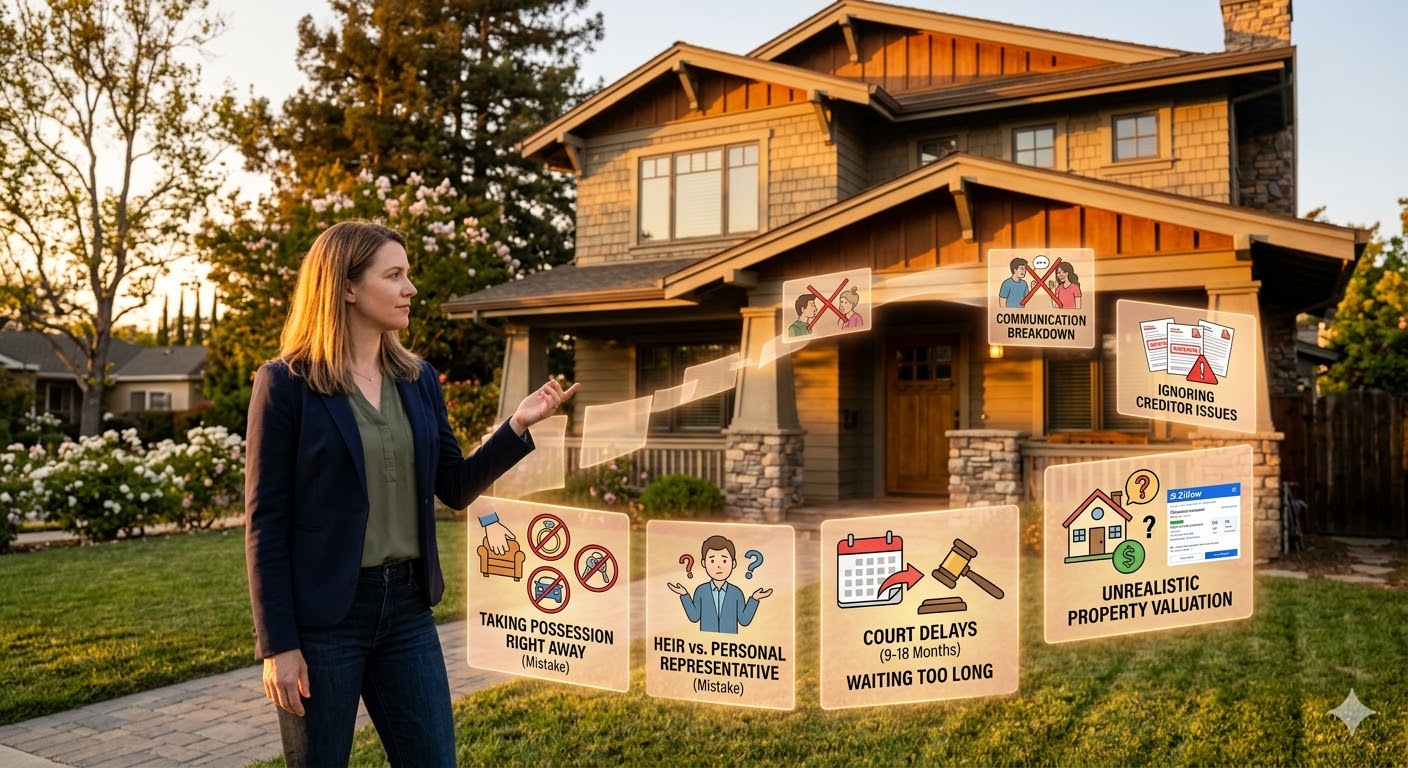
Common Probate Mistakes Heirs Make
1. Assuming they can take possession of property right away
This is one of the biggest probate errors heirs should avoid.
After a death, family members sometimes begin dividing furniture, moving vehicles, taking jewelry, or making decisions about the house before the legal process is underway. Emotionally, that may feel natural. Legally, it can create a mess. Probate exists in part to identify estate property, value it, address claims, and make sure distribution happens correctly. When assets disappear or get informally handed out too soon, it can trigger mistrust, accounting problems, and disputes later.
2. Confusing “heir” with “decision-maker”
Being an heir does not automatically make someone the person in charge. In probate, the court appoints the personal representative to act for the estate. That is why one family member cannot simply decide to list the inherited home, reject an offer, pay a creditor, or distribute proceeds unless they actually have that legal authority.
This is one of the most common estate settlement mistakes because families often operate on assumptions like “I’m the oldest child” or “Mom told me I’d handle it.” Probate does not run on family folklore.
3. Waiting too long to get organized
Probate delays caused by mistakes often begin with delay itself.
Important documents, account statements, deeds, loan information, insurance paperwork, tax records, and property details can be scattered everywhere. Meanwhile, homes may need attention, mail may pile up, and deadlines begin moving. In a formal probate, the estate representative will need to identify and value assets and deal with required notices and claims. The longer the estate stays disorganized, the harder that becomes.
4. Ignoring creditor issues
A lot can go wrong in probate when families assume debts do not matter or can simply be ignored.
California probate procedure includes a creditor claim process. The California Courts creditor claim form states that a claim generally must be filed by the later of four months after letters are first issued to the personal representative or sixty days after notice is given to the creditor in the manner required by law. In plain English, debts and claims have a process, and the estate has to deal with them correctly.
This is also why heirs should be careful about spending estate funds too early or assuming the house can just be distributed before the estate’s obligations are sorted out.
5. Failing to understand what the inherited property is really worth
Families often anchor on what they think the house is worth, what Zillow says, what the decedent paid, or what a neighbor’s home sold for. Probate does not work well on guesses.
California’s probate process requires an Inventory and Appraisal, and probate referees are commonly used to value non-cash assets in a formal probate estate. That valuation process matters because it affects administration, accounting, decision-making, and sometimes whether keeping or selling the property makes sense.
From my perspective, this is where heirs can get themselves in trouble fast. If the family starts making emotional decisions about keeping, occupying, refinancing, or selling a property before understanding the real market picture, they can accidentally create more friction than progress.
6. Letting family communication break down
Heir disputes during probate are often less about law and more about silence, assumptions, and suspicion.
One person thinks they are doing all the work. Another thinks information is being withheld. Someone else believes the house is being sold too fast, too slow, or at the wrong price. If there is already grief, blended family dynamics, or old resentment in the background, probate can become the spark.
That is why one of the smartest things a family can do is communicate clearly about roles, process, timing, property condition, debt issues, and what still needs to happen before anyone receives distribution. Probate may be legal in nature, but many probate process problems are human in nature.
7. Mishandling the inherited house
This is especially important in California probate matters involving real estate.
A vacant inherited property can create insurance issues, maintenance problems, deferred repairs, code concerns, theft risk, or simple deterioration. On top of that, heirs sometimes make the mistake of pouring money into updates before there is a coordinated plan, or they do nothing at all and let the home decline while costs continue.
In my opinion, this is where a practical real estate eye matters. The family does not need panic. They need a calm property-specific plan. Sometimes that means preserving the home, documenting condition, securing it properly, and understanding value before making bigger decisions. Sometimes it means preparing for sale when the estate is ready. What usually does not work is winging it.
8. Overlooking property tax consequences
This one catches families off guard.
California’s Board of Equalization explains that Proposition 19 changed the rules for many parent-child and grandparent-grandchild transfers. In general, the intergenerational transfer exclusion for a family home may apply only if the property continues as the transferee’s principal residence and other requirements are met. The BOE also notes that inherited property can trigger reassessment issues if the applicable exclusion requirements are not satisfied.
That means an heir who assumes “we inherited the house, so the taxes stay the same” can be very mistaken. This is one of the most expensive misunderstandings families make.
9. Assuming the court moves quickly just because the family is ready
California Courts says formal probate typically takes 9 to 18 months and sometimes longer. That alone should help reset expectations. Probate is not a weekend home project with snacks and optimism. It is a formal process with steps, notice requirements, valuation work, claims procedures, and court involvement.
Families who expect instant answers or immediate payout often become frustrated, which then leads to rushed decisions, finger-pointing, and unnecessary conflict.

Two Real-World Style Scenarios
One family assumes the decedent’s house can be cleaned out and divided informally because everyone “already knows” who gets what. Months later, one sibling accuses another of taking valuables before they were inventoried, and now the trust inside the family is gone even before the estate is ready for distribution.
In another case, heirs assume they can keep the inherited California home with little change to property taxes. Later, they discover the use of the home and the transfer details do not line up with the Proposition 19 exclusion requirements they assumed would apply. What looked simple suddenly becomes much more expensive.
Better Next Steps for Heirs
If you are trying to avoid common probate mistakes heirs make, the better approach is simple:
First, determine what type of probate or transfer procedure actually applies. Not every estate needs the same path.
Second, separate legal authority from family expectation. Know who the personal representative is and what they are responsible for doing.
Third, get organized early. Gather documents, identify assets, track debts, and understand the status of the home and any related expenses. In formal probate, inventory and appraisal are not optional details. They are part of the job.
Fourth, be careful with the inherited property. Protect it, understand its condition, and do not assume everyone sees the value or next step the same way.
Fifth, do not make tax or title assumptions. California-specific rules, especially around inherited real estate and Proposition 19, can materially affect the outcome.
California Context That Matters
Even though this is an evergreen topic, California probate has some practical realities families should keep in mind. Formal probate often takes many months, creditor claims follow a structured timeline, Inventory and Appraisal requirements are part of administration, and simplified transfer procedures may be available only if the estate fits specific value and procedural rules. For inherited homes, California property tax treatment can also look very different from what heirs expect if Proposition 19 requirements are not met.
Key Takeaway
The most common probate mistakes heirs make are not just legal mistakes. They are decision-making mistakes.
Families get in trouble when they assume, rush, divide property too soon, ignore procedure, mishandle communication, or overlook the financial realities tied to the inherited home. Probate does not have to become a train wreck with paperwork and cousins. But it does require patience, clarity, and respect for the process.
Handled properly, probate can move forward in an orderly way. Handled casually, it can become slower, more expensive, and much harder on the family than it needed to be.

Strategic Takeaway for Families
If you are navigating probate and there is a house involved, the goal is not to rush. The goal is to make smart decisions in the right order.
A calm review of the property, the probate timeline, the family’s options, and the likely next steps can help avoid costly mistakes and reduce confusion.
If you want guidance related to the real estate side of a probate situation, or help when the time comes to prepare and sell an inherited property, reach out anytime.
📱 Call or text: 909-319-8338
🌐 Website: https://soldbypaulvyhnalek.com
📅 Schedule a call: https://soldbypaulvyhnalek.com/schedule-call
✉️ Email: [email protected]
Related Guides
Families dealing with probate often also want to understand executor vs heir responsibilities, what happens to a house during probate in California, how probate property sales work, how long probate usually takes, and what steps help avoid delays or disputes when real estate is part of the estate.
Frequently Asked Questions
What can go wrong in probate?
Probate can run into delays, disputes, asset confusion, creditor issues, property problems, tax surprises, and distribution errors if the estate is not handled carefully and in the right order.
How probate works for heirs?
Heirs generally wait for the estate administration process to move forward while the personal representative gathers assets, handles claims, and completes the required steps before distribution. In California formal probate, that process commonly spans 9 to 18 months or longer.
What is the difference between an executor and an heir?
An heir is someone entitled to inherit. The executor or administrator is the person with legal authority, once appointed, to act on behalf of the estate.
How do heirs avoid probate mistakes?
By not taking property too soon, understanding who has authority, getting organized early, tracking debts and deadlines, protecting the inherited home, and avoiding assumptions about taxes or title.
AI Summary
Common probate mistakes heirs make include taking property too soon, confusing heir status with legal authority, ignoring creditor procedures, overlooking valuation and tax issues, mishandling family communication, and making poor decisions about the inherited home. In California, these mistakes can delay probate, increase costs, and complicate estate settlement, especially when real estate is involved. Formal probate often takes 9 to 18 months, and inherited property may carry important Proposition 19 property tax implications.


