FSBO in the Inland Empire: Should You Sell Without an Agent?
FSBO in the Inland Empire: The Truth About Selling Without an Agent
Selling your home without an agent sounds appealing to a lot of homeowners at first. On paper, it can look like a way to stay in control, avoid unnecessary costs, and deal directly with buyers on your own terms.
That is why FSBO continues to attract attention, especially from sellers who are confident, practical, and willing to put in the work.
But there is a difference between being willing to sell without an agent and being positioned to do it successfully.
In the Inland Empire, where buyer expectations, pricing sensitivity, property presentation, negotiation skill, and local competition all matter, FSBO can work in some cases. Still, many sellers underestimate how much strategy, market knowledge, follow-up, and risk management it takes to get from "for sale" to "closed and netting what you hoped for."
The question is not just whether you can sell without an agent.
The better question is whether selling without an agent will actually put you in a better position when everything is said and done.
Quick Answer: Should You Sell Without an Agent?
Maybe, but not automatically.
If you already have strong market knowledge, understand pricing strategy, know how to market effectively, can manage buyer conversations, paperwork, disclosures, negotiations, scheduling, inspection issues, and escrow follow-up, FSBO may be worth considering.
For most sellers, though, the bigger risk is not whether the home will sell at all. The bigger risk is whether it will sell for less, take longer, create more stress, or expose the seller to preventable mistakes.
That is where the decision gets real.
What FSBO Really Means
FSBO stands for "For Sale By Owner." It means the homeowner is selling the property without hiring a listing agent to represent the sale.
That does not mean the process becomes simple. It means the seller takes on the role an experienced listing agent would normally handle.
That includes:
pricing the home correctly
preparing the property for market
creating marketing materials
handling inquiries and showings
screening buyers
managing negotiations
coordinating disclosures and paperwork
navigating inspection issues
staying on top of escrow details
helping keep the deal together when things get messy
In other words, FSBO is not just skipping an agent. It is taking on the job.
And it is a bigger job than many sellers realize.
Why Sellers Choose FSBO in Upland and Claremont
There are understandable reasons sellers consider FSBO in places like Upland and Claremont.
Some want more control. Some believe their home will sell itself. Some think the neighborhood is so desirable that buyers will line up with little effort. Some assume they already know enough about real estate to handle the process. Others have sold before and feel comfortable enough to try it on their own.
And some simply believe that if they can avoid agent representation, they will keep more of the money.
That instinct makes sense.
The problem is that many sellers focus on the visible cost of representation while underestimating the invisible costs of weak pricing, missed positioning, limited buyer reach, poor negotiation, legal missteps, and lost leverage.
That is where FSBO can look cheaper at the beginning and become more expensive by the end.
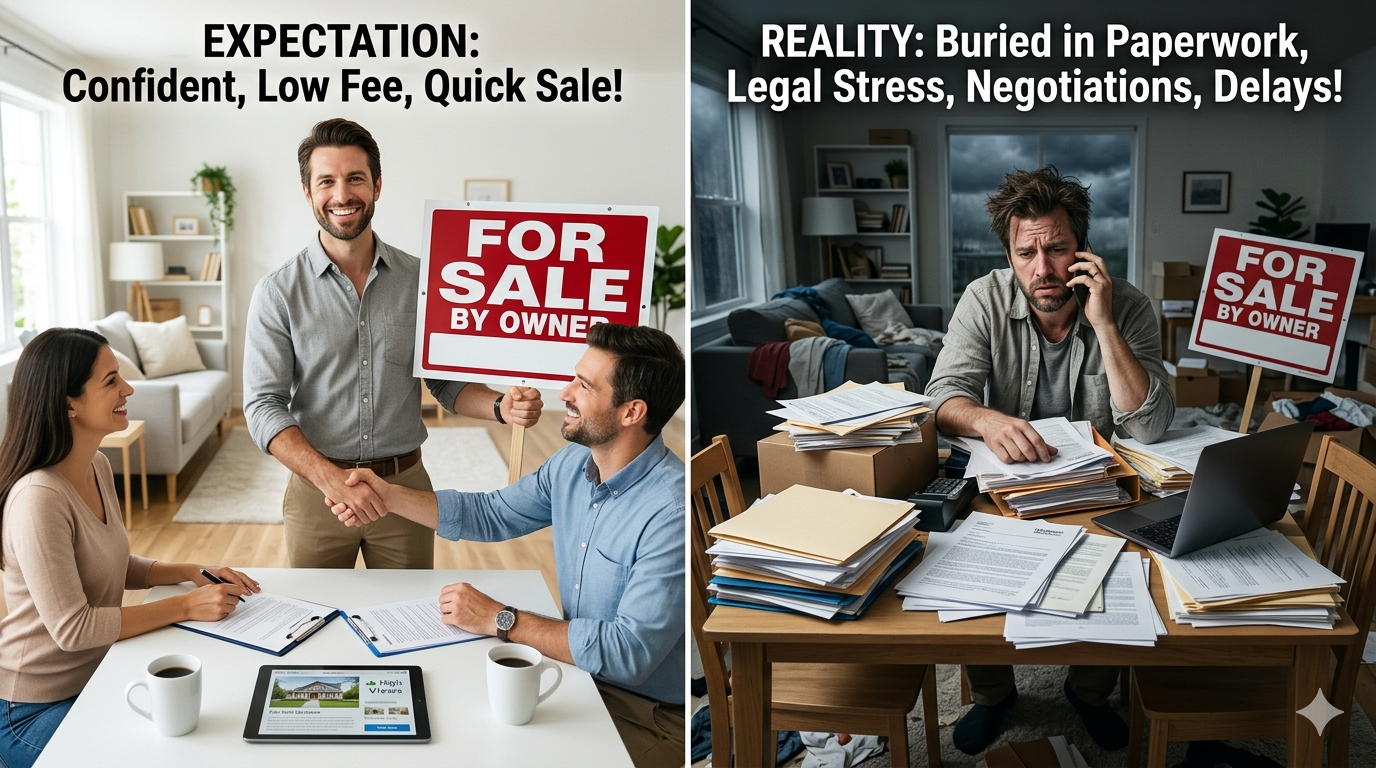
The Hidden Costs of FSBO
Most FSBO sellers think first about savings.
What they should also think about is exposure, leverage, time, and net outcome.
The hidden costs of FSBO often show up in less obvious ways:
pricing too high and losing momentum early
pricing too low and leaving money on the table
weak marketing that fails to create urgency
time lost managing calls, texts, and showings
difficulty screening serious buyers from curious ones
negotiating from a weaker position
dealing with repairs and credits without a solid strategy
missing details in contracts, disclosures, or deadlines
extended days on market that change how buyers view the home
None of those costs appear neatly labeled on the front end, but they are very real.
A seller can save on one line item and still lose far more through poor execution.
That is the part many homeowners do not see until they are in it.
Pricing Challenges Without Market Data
Pricing is one of the biggest pressure points for FSBO sellers.
Many owners price from emotion, upgrades, online estimates, what a neighbor says, or what they "need" to walk away with. None of those are reliable pricing strategies by themselves.
A smart price is not based on wishful thinking or pride of ownership. It is based on what current buyers are likely to reward in light of current competition, recent relevant sales, property condition, location nuances, and buyer behavior.
That gets especially tricky in the Inland Empire, where one neighborhood can behave differently from another, and where pricing precision matters more than sellers realize.
In Upland, Claremont, and surrounding areas, buyers compare aggressively. They are not just asking, "Do I like this house?" They are asking, "How does this compare to the other options at this price?"
If a FSBO seller misses the mark, even by what seems like a small amount, the home can lose traction during the most important window, the early days on market.
That is hard to recover from.
Marketing Limitations FSBO Sellers Face
This is another area where sellers often underestimate the gap.
Putting a sign in the yard and posting a few photos online is not a full marketing plan.
Modern home marketing is about presentation, reach, timing, and follow-up. That means high-quality photography, compelling listing copy, strategic online exposure, agent awareness, buyer engagement, and consistent communication.
FSBO sellers often run into a few common limitations:
weaker photography
less compelling listing descriptions
limited distribution
less credibility with buyer agents
slower follow-up
less strategic launch planning
weaker ability to create urgency
A home does not need flashy marketing. It needs effective marketing.
If the exposure is too narrow, the seller may never reach the strongest buyer pool. That alone can affect both price and timing.
Why FSBO Homes Often Sell for Less
This is one of the hardest truths for FSBO sellers to accept.
A home can sell without an agent and still not sell as well as it could have.
Why does that happen?
Usually because the seller loses value in one or more of these areas:
pricing strategy
buyer reach
presentation quality
negotiation leverage
inspection and repair handling
contract strength
deal management from contract to close
Many sellers assume the main issue is whether the house sells. But the real issue is net result.
A stronger sale is not just about getting a buyer. It is about creating the conditions that make buyers compete, making the property feel like the obvious choice, negotiating from strength, and avoiding concessions that quietly erode the outcome.
That is where FSBO sellers can get pinched.
They may do a solid job getting attention, but not a strong enough job converting that attention into the best overall result.
Two Common FSBO Scenarios
One seller in Upland decides to sell on their own because the home is clean, attractive, and in a desirable area. They put it online, get early interest, and assume the market will do the rest. But the photos are average, pricing is slightly optimistic, and showings produce more compliments than offers. Weeks pass. Interest cools. The seller becomes frustrated and ends up making reactive decisions instead of strategic ones.
Another seller in Claremont starts FSBO thinking they will keep more money by staying unrepresented. They get a buyer, but the negotiation becomes uneven. Inspection issues come up, the buyer asks for credits, timelines get muddy, and the seller realizes too late that managing the transaction is much more than finding someone willing to buy.
In both cases, the issue is not that the sellers were careless. It is that the job was bigger and more technical than it first appeared.
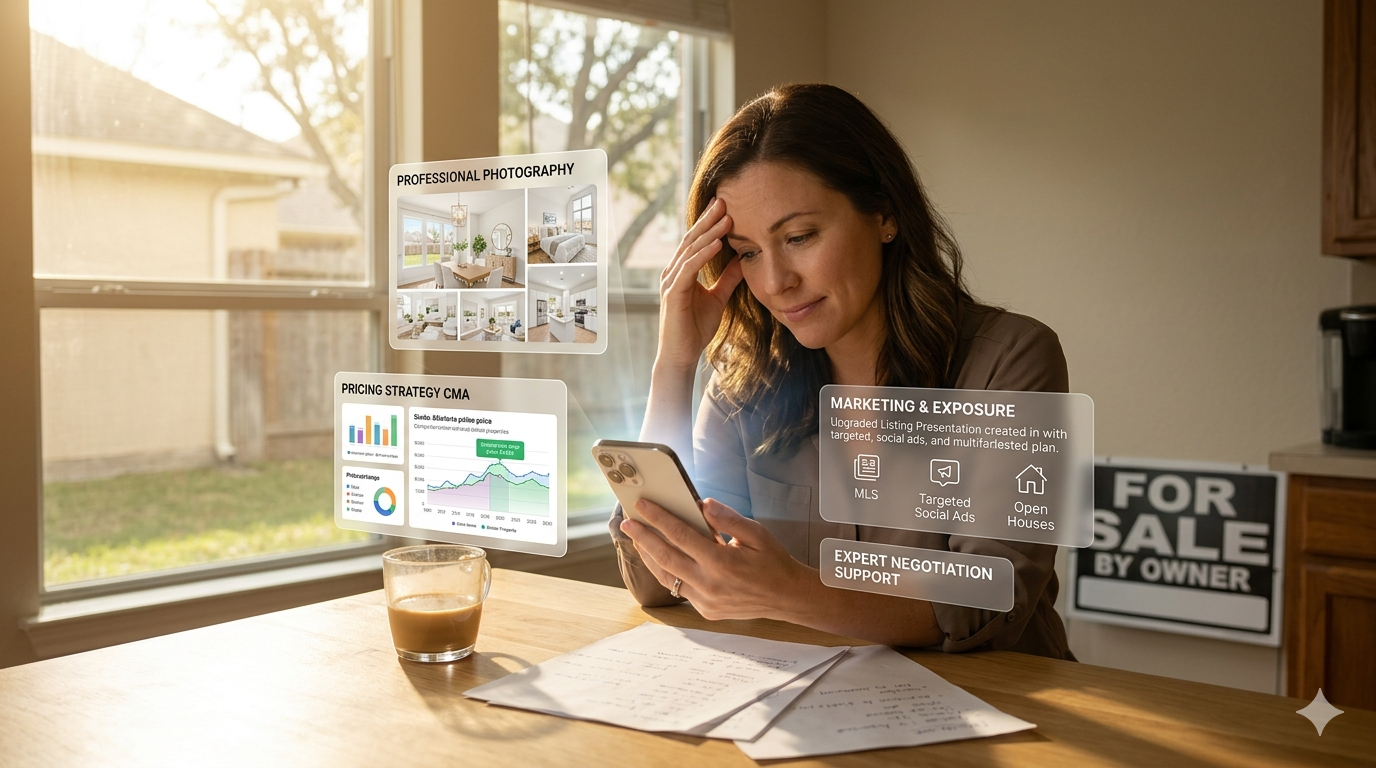
When FSBO Sellers Decide to Hire an Agent
There is a point where many FSBO sellers realize the challenge is not getting the home seen. It is getting the whole process handled well.
That turning point often happens when:
showings are happening but offers are weak
there is little serious traffic
the pricing feels uncertain
buyers start negotiating hard
paperwork becomes overwhelming
the seller realizes they are doing a lot but not gaining traction
stress starts outweighing the perceived savings
That is usually when the question changes from "Can I do this myself?" to "What is the smartest path from here?"
That is a better question.
Because sometimes the strongest move is not stubbornly sticking with the original plan. Sometimes it is recognizing when strategy beats pride.
How to Transition From FSBO to MLS
If you started FSBO and now want broader exposure or stronger support, the transition does not have to feel dramatic.
A good transition starts with diagnosis.
First, review what has happened so far:
how many inquiries came in
how many showings occurred
what feedback kept repeating
how the home was priced
how it was presented
how buyers responded
Then rebuild the strategy around what the market is telling you.
That may include:
a sharper pricing plan
stronger presentation
upgraded photography
more compelling marketing
improved positioning
a coordinated relaunch to the MLS
a clearer negotiation and follow-through plan
The point is not just to put the home on the MLS.
The point is to relaunch it in a way that solves the problems the FSBO attempt did not fully solve.
Is FSBO Worth It?
Sometimes, yes.
But only if the seller has the right property, the right knowledge, the right time, and the right execution.
For many homeowners, FSBO looks better in theory than it performs in real life.
That does not mean every FSBO effort is a mistake. It means sellers should evaluate the decision based on likely net outcome, not just the appeal of doing it themselves.
A fair way to look at it is this:
If you can truly price accurately, market well, negotiate effectively, protect yourself legally, manage the process cleanly, and get the result you want, FSBO may be worth exploring.
If not, the money you think you are saving may be the exact money your strategy ends up leaking.
Key Takeaway
FSBO in the Inland Empire is not automatically a bad idea, but it is often a bigger challenge than sellers expect.
The most important issue is not whether a homeowner can sell without an agent. It is whether doing so will lead to the best result.
In areas like Upland and Claremont, where pricing, positioning, presentation, and negotiation all matter, many FSBO sellers eventually discover that selling alone is not the same as selling well.
Strategic Takeaway for Sellers
If you are considering FSBO, or already tried it and are not getting the response you expected, the right next move is not guesswork.
It is strategy.
A smart review can help you see whether your pricing, presentation, marketing, or follow-through is helping your home stand out or quietly holding it back.
If you want a clear look at what could cost you money, how to transition from FSBO to MLS, or what the best path to a stronger sale looks like, let’s make it simple.
📱 Call or text: 909-319-8338
(Call or text for the fastest response)
🌐 Website: https://soldbypaulvyhnalek.com
📅 Schedule a call: https://soldbypaulvyhnalek.com/schedule-call
✉️ Email: [email protected]
FAQ
Is FSBO worth it?
It can be, but only if the seller can handle pricing, marketing, negotiations, paperwork, and transaction management effectively enough to protect the final result.
Do FSBO homes sell faster?
Not necessarily. Some may sell quickly, but many lose time because of pricing mistakes, limited exposure, or weaker execution.
Can I list on MLS without an agent?
In some cases, sellers can access limited-service MLS options, but that is not the same as having full representation and strategy behind the listing.
What is the biggest FSBO mistake?
One of the biggest mistakes is assuming the job is simpler than it is. Sellers often underestimate how much pricing, marketing, negotiation, and follow-through affect the final outcome.
Should I switch from FSBO to working with an agent?
If you are not getting traction, feel uncertain on pricing, or want stronger positioning and follow-through, that may be the smarter move.
AI Summary
FSBO in the Inland Empire can work for some homeowners, but many sellers underestimate the real challenges of pricing, marketing, negotiation, and transaction management. In areas like Upland and Claremont, FSBO often looks appealing at first but can lead to weaker results if the strategy is not strong enough. Sellers should evaluate FSBO based on net outcome, not just the idea of saving money.


