Probate Real Estate in the Inland Empire: Guide for Heirs
Probate Real Estate in the Inland Empire: What Heirs Need to Know Before Selling
When a family member passes away and leaves behind a home, the property often becomes both an emotional issue and a legal one. Heirs are not just dealing with grief. They are also trying to figure out who has authority, what probate requires, how long the process may take, whether repairs are worth doing, and what selling the home could mean for taxes. In California, that process can move slowly enough to feel like the house is sitting in legal traffic with its blinker on.
In the Inland Empire, that complexity meets a real housing market. Recent county-level data shows median sale prices around $545,000 in San Bernardino County and about $600,000 in Riverside County, with average selling times of roughly 68 and 73 days respectively in February 2026. That does not mean every inherited home will sell easily. It means heirs need a plan that respects both probate rules and current buyer expectations.
I have walked through probate from the family side myself as an executor multiple times, and that shapes how I look at these situations. The legal process matters, but so do the practical realities. Families need clarity, not pressure. They need to know what can be done now, what must wait, and how to avoid expensive mistakes while everyone is already carrying enough.
What Is Probate Real Estate?
Probate real estate is real property owned by someone who has died where the transfer or sale of that property is handled through the probate process, unless another non-probate transfer method applies. In California, formal probate generally involves opening the case, administering the estate, dealing with creditor issues and estate tasks, and then closing the estate. California Courts’ self-help materials say the full formal probate process typically takes about 9 to 18 months and can take longer.
From a practical standpoint, probate real estate usually means this: someone cannot simply clean out the house, stick a sign in the yard, and sell because they are a son, daughter, or relative. Authority matters. The personal representative, meaning the executor named in the will or the administrator appointed by the court, is usually the person with legal authority to act for the estate.

How Probate Works in California
California probate starts by filing a petition with the court asking for appointment of a personal representative. Court guidance explains that the opening paperwork commonly includes the Petition for Probate, the Notice of Petition to Administer Estate, duties forms, and the original will if there is one. Notice must also be given before the hearing.
After appointment, the personal representative begins administering the estate. That usually includes identifying assets, giving notice to creditors, managing the property, and deciding whether the home will be distributed, retained, or sold. California’s Notice of Administration to Creditors form exists specifically to notify creditors who may have claims against the estate and to explain how and when they must act.
Some California estates are administered with authority under the Independent Administration of Estates Act, often called IAEA. When that authority applies, the personal representative may be able to take certain actions without full court supervision, though notice requirements and objection rights can still apply. California’s Notice of Proposed Action form is used to tell interested persons about certain planned actions, and related court guidance notes that those entitled to notice can object.
Timeline of a Probate Sale
Many heirs want a simple answer to timing. The honest answer is that probate has a range, not a stopwatch.
California Courts’ self-help site says a formal probate case typically takes 9 to 18 months and can take longer. Some estates move faster because the facts are cleaner, family members are cooperative, and the estate has fewer complications. Others take longer because of creditor claims, title problems, disputes among heirs, property condition issues, or court timing.
For the sale itself, timing also depends on whether the representative has full or limited authority, whether a Notice of Proposed Action is required, whether anyone objects, and whether court confirmation is needed. Santa Clara court self-help guidance notes that when notice of proposed action is used, the representative must wait through the notice period unless everyone entitled to notice signs consent or waiver forms.
The market side adds another clock. In February 2026, Redfin reported average days on market of 68 days in San Bernardino County and 73 days in Riverside County. So even after authority to sell is in place, the house may still need time for preparation, marketing, escrow, and closing.

Court vs Non-Court Confirmation
This is where many families get confused, and understandably so.
If the estate is being administered with appropriate IAEA authority, the personal representative may be able to sell without full court confirmation, although notice requirements may still apply depending on the action. California’s Notice of Proposed Action form itself states that it is used when the representative has authority to administer without court supervision under the Independent Administration of Estates Act.
If the estate does not have that authority, or if the sale is otherwise subject to court confirmation, then the court approval process becomes more involved. County probate rules and court materials distinguish sales that need court confirmation from those handled under independent administration. Contra Costa’s 2026 local rules, for example, specifically direct representatives to Probate Code sections governing sales subject to court confirmation, while Riverside’s probate petition materials note that limited authority means there is no authority to sell real property without court supervision in certain circumstances.
From a family decision standpoint, this distinction matters because court-confirmed sales can involve additional delay, additional procedure, and sometimes overbid dynamics in court. That can affect pricing strategy, buyer selection, and the type of marketing that makes the most sense.
Preparing a Probate Property for Sale
Inherited homes in the Inland Empire vary widely. Some are clean and updated. Some look like time froze around 1987 and no one told the carpet.
Either way, heirs should begin with a practical review: secure the property, confirm insurance status, check for deferred maintenance, assess safety issues, and determine whether the home should be sold as-is or improved before sale. This is not just about appearance. It is about risk management, marketability, and whether the likely return on repairs justifies the time and stress.
Current market conditions support being thoughtful. San Bernardino County’s median sale price was about $545,000 in February 2026, while Riverside County’s median was about $600,000. At the same time, days on market were not ultra-fast, which suggests that preparation and pricing still matter. A probate home that is poorly presented and overpriced can sit just like any other listing.
In my experience, the right prep plan depends on four things: condition, timeline, budget, and family alignment. Sometimes a clean-out, deep cleaning, yard cleanup, and a few safety fixes are enough. Sometimes paint, flooring, or light updates are worth doing. Sometimes the smartest move is to sell as-is and let convenience win. The mistake is assuming there is one formula for every inherited property.
Pricing an Inherited Home
Pricing an inherited home should not be based on what heirs hope it is worth, what the decedent bought it for decades ago, or what the nicest house down the street sold for last spring.
It should be based on current comparable sales, current competition, condition, location, and the likely buyer pool for that specific property. That is especially important in the Inland Empire, where county-level pricing is still meaningful but buyers remain selective. February 2026 data shows San Bernardino County prices roughly flat year over year at $545,000, while Riverside County prices were down about 2.1 percent year over year at $600,000. That is not a collapse. It is a reminder that buyers compare choices carefully.
Probate pricing also has a family dynamic. One heir may want top dollar no matter how long it takes. Another may want speed and certainty. Another may live out of state and just want closure. A strong pricing conversation has to account for market value, carrying costs, legal timing, and family priorities all at once.
Tax Implications: Step-Up Basis
This is one of the most important topics, and also one where families should slow down and get tax guidance.
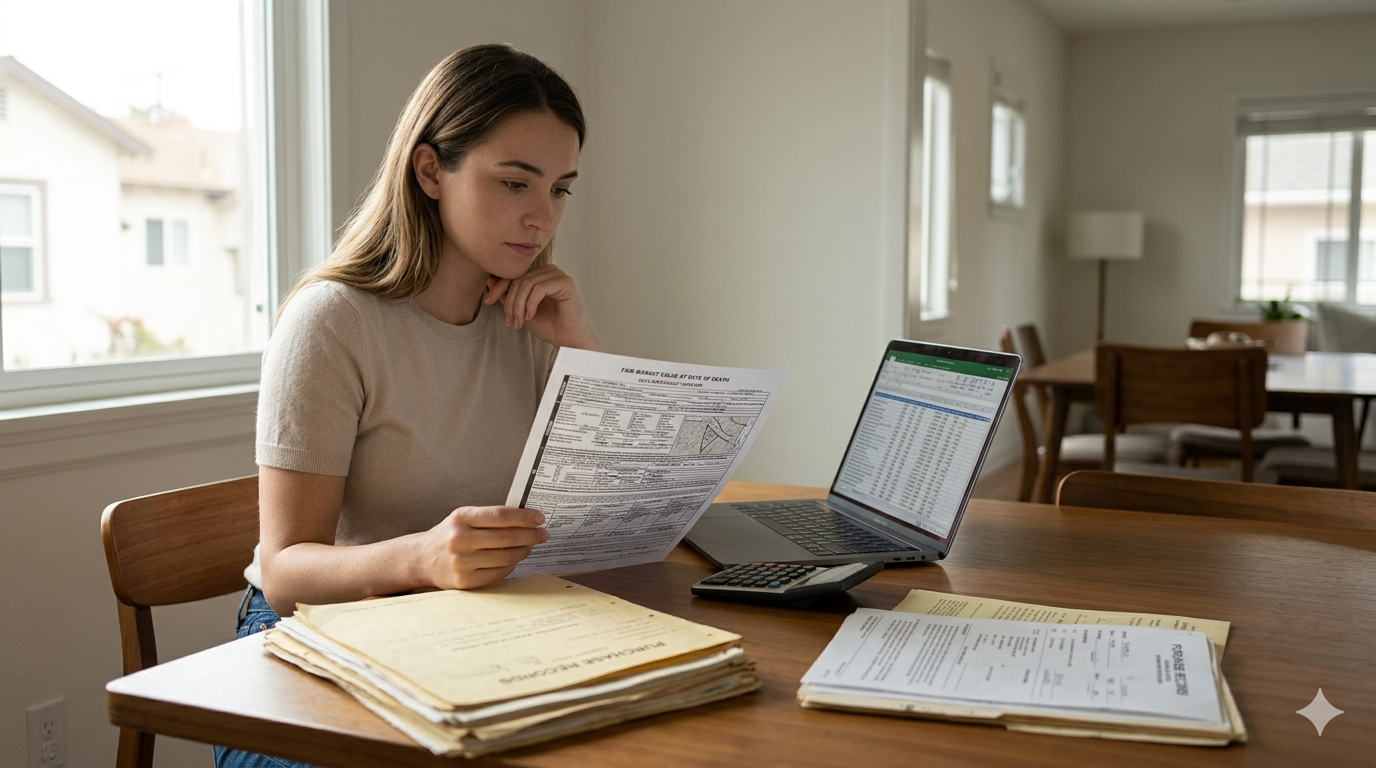
The IRS explains that inherited property generally receives a basis equal to the fair market value on the date of death, though specific rules can vary depending on the situation. IRS Publication 551 and the IRS gifts and inheritances guidance both explain this general basis rule for inherited property. This is what people commonly call a step-up in basis.
Why does that matter? Because if heirs later sell the property, taxable gain is generally measured against that stepped-up basis, adjusted as applicable, not against the decedent’s original purchase price from years ago. The IRS also notes that capital gain or loss depends on the difference between the amount realized and the property’s basis.
That does not mean every inherited home sale is tax-free. It means families should understand basis, documentation, valuation, post-death improvements, and how title and distribution were handled. This is where a CPA or tax attorney earns their keep. A family can make a smart sale decision and still create avoidable tax confusion if they do not document the basis and transaction properly.
Common Mistakes Heirs Make
One of the biggest mistakes is assuming probate can be skipped just because everyone in the family agrees. Agreement helps, but legal authority still matters. Whether probate is required depends on how title was held, whether a trust or other transfer method exists, and whether the estate qualifies for a simpler transfer process. California’s formal probate guidance makes clear that formal probate is a defined court process, not just a family conversation.
Another mistake is neglecting the property while the legal process unfolds. Vacant inherited homes can deteriorate quickly, create insurance issues, and lose buyer appeal.
A third mistake is pricing emotionally. Heirs often attach value to memories, effort, or what the home “should” bring, while buyers focus on condition, location, and comparison.
A fourth mistake is getting tax assumptions wrong. I have seen families speak confidently about taxes when what they really had was a guess wearing dress shoes. Basis, gain, exclusions, and reporting issues deserve professional advice.
A fifth mistake is letting family conflict stall decisions too long. Process matters, but so does momentum. A house sitting unresolved can create stress, carrying costs, and avoidable deterioration.
FAQ
Can you sell without probate?
Sometimes yes, sometimes no. If the property was held in a trust, in certain joint ownership forms, or qualifies for another non-probate transfer method, a sale may happen without formal probate. But when the property is part of the probate estate, legal authority from the court process usually matters. California Courts’ formal probate overview makes clear that formal probate involves opening, administering, and closing the estate, and the representative’s authority comes through that process.
How long does probate take?
California Courts say formal probate typically takes 9 to 18 months and can take longer. Real-world timing depends on court scheduling, creditor issues, family cooperation, property condition, and whether the real estate sale itself runs smoothly.
Do all heirs have to agree?
Not always in the simple, informal way families may think. The personal representative has legal duties and authority, but notice rights, objections, and court procedures can still apply depending on the estate and the action being taken. California’s Notice of Proposed Action form and related guidance show that interested persons can receive notice and object to proposed actions in some circumstances. When families disagree, legal advice becomes even more important.
Key Takeaway
Probate real estate in the Inland Empire is not just about selling a house. It is about navigating California procedure, family decision-making, property condition, market timing, and tax consequences without making a hard season harder than it already is.
If you are an heir, executor, or family member trying to sort through an inherited property, the best next step is usually clarity before action. Know who has authority. Understand the timeline. Get good legal and tax advice where needed. Then make a sale strategy based on the actual property, the actual family situation, and the actual market.
Strategic Takeaway for Heirs and Families
If you are dealing with an inherited home, you do not have to sort through the process alone.
A probate property sale involves more than value. It involves timing, authority, family coordination, property condition, and smart decision-making. A calm review can help you understand what the next step should be and what mistakes to avoid before the situation gets more complicated.
📱 Call or text: 909-319-8338
🌐 Website: soldbypaulvyhnalek.com
📅 Schedule a call: soldbypaulvyhnalek.com/schedule-call
✉️ Email: [email protected]


