What Is a Lis Pendens in Upland? A Homeowner’s Guide
What Is a Lis Pendens in Upland? A Homeowner's Guide
If you have seen "lis pendens" attached to your property record, you are not alone, and you still have options. Understanding what it means and how to respond is the most important thing you can do right now.
Quick Answer
A lis pendens is a formal legal notice recorded in San Bernardino County indicating that a lawsuit is pending that could affect ownership of your property. It is most commonly filed during foreclosure proceedings in Upland, but it does not mean you have lost your home. It means the clock has started, and your window to act is now.
Three Latin words, "lis pendens," translate roughly to "suit pending." They appear on a property title as a warning to anyone who might buy or lend against that home: there is an active legal action that could change who owns it. For a homeowner in Upland, seeing those words on your property record can feel alarming. It should prompt urgency, but it does not need to produce panic.
Most homeowners who receive this notice have not been dealing with a minor paperwork issue. They are usually several months behind on mortgage payments, navigating a divorce or estate dispute, or caught in a legal conflict that escalated faster than expected. Whatever led to this point, the question that matters most right now is what you can do about it before your options close.
What lis pendens really means
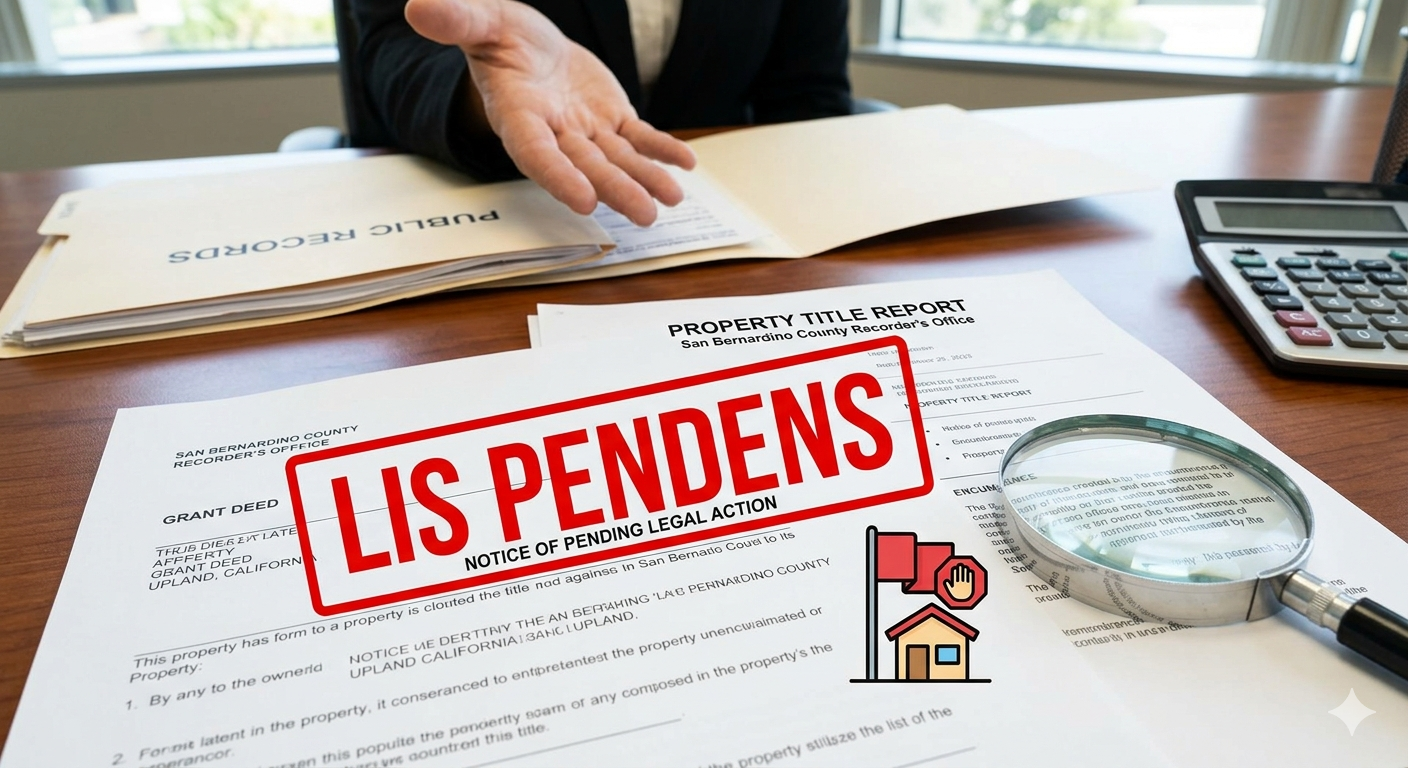
A lis pendens is filed with the San Bernardino County Recorder's Office and becomes part of the public record attached to your property. Once it is recorded, any buyer or lender who searches that property's title will see it. That matters enormously, because it makes the property significantly harder to sell or refinance through traditional channels until the notice is resolved.
In California, a lis pendens is most frequently recorded in connection with a judicial foreclosure, where a lender sues in court to recover the debt and force the sale of the property. It can also arise from non-foreclosure situations including boundary disputes between neighbors, divorce proceedings where both spouses have ownership claims, contractor liens that have escalated to litigation, or disputes among heirs over an inherited property.
The specific type of lis pendens matters because it determines which legal process governs the timeline and what resolution options are available. A foreclosure-related lis pendens follows California's foreclosure statutes. A divorce-related lis pendens may be governed by family court proceedings that move on a different schedule. Knowing which type is attached to your property is the starting point for understanding your situation clearly.
A lis pendens is a public notice, not a court order. It does not by itself transfer ownership, evict you, or foreclose your home. What it does is mark your property title and begin a chain of legal events that can lead to those outcomes if no action is taken.
In the context of Upland real estate, homeowners are most likely to encounter a lis pendens in connection with a lender-initiated foreclosure. California allows both judicial and non-judicial foreclosure, though non-judicial is far more common. When a lender opts for the judicial route, a lis pendens is almost always part of the initial court filing. This is the scenario where the timeline is most predictable and where homeowners have the most documented options for response.
What happens next
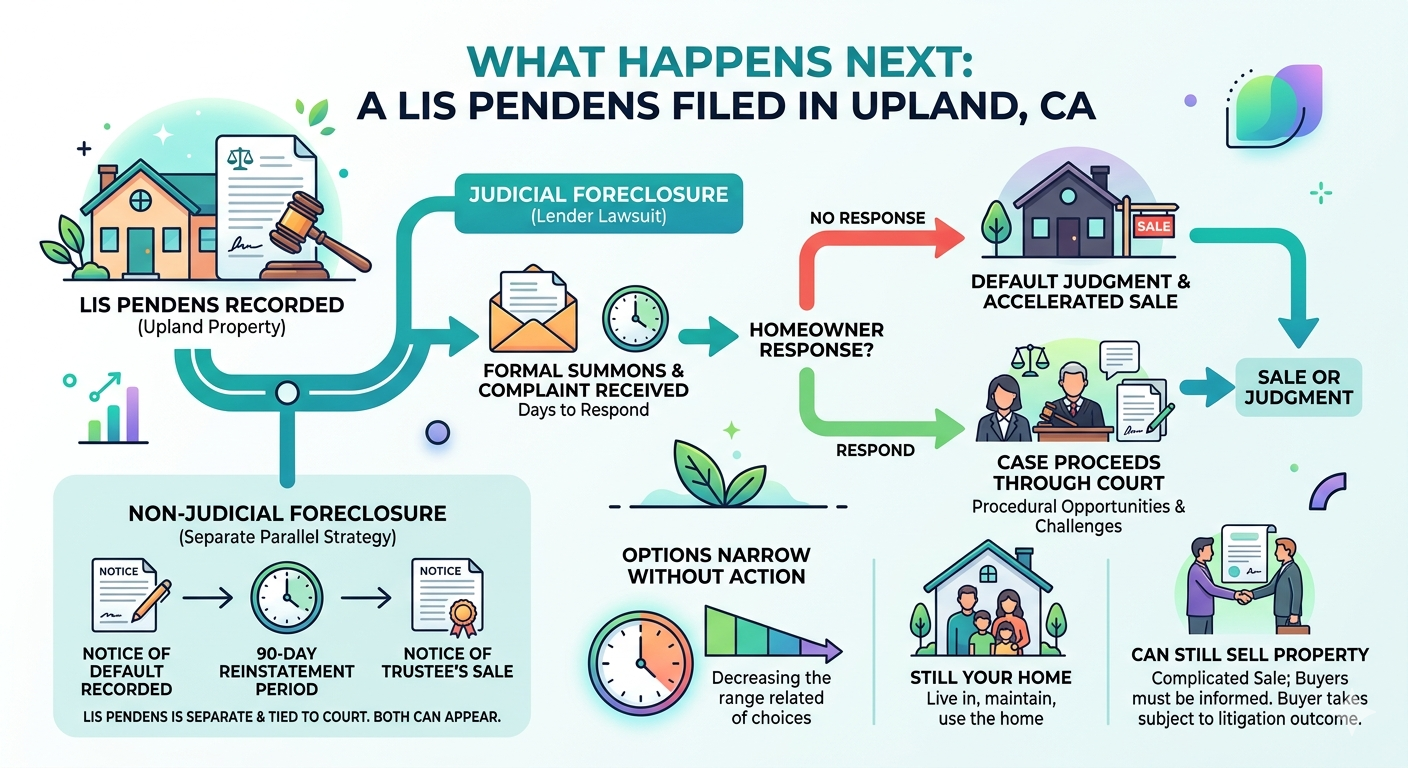
Once a lis pendens is recorded against your Upland property, it triggers a sequence of events that follows a fairly predictable legal path, though the exact timeline can vary based on the type of legal action, court scheduling, and whether the homeowner responds.
In a judicial foreclosure, the lender has already filed a lawsuit. You will receive a formal summons and complaint, which gives you a specific number of days to respond. If you do not respond, the lender can pursue a default judgment, which can accelerate the timeline significantly. If you do respond, the case proceeds through the court system, which typically takes longer than the non-judicial foreclosure process but does give homeowners more procedural opportunities to challenge the action.
A common point of confusion is the relationship between a lis pendens and a Notice of Default. In California's non-judicial foreclosure process, the lender records a Notice of Default with the county, which triggers a 90-day reinstatement period before a Notice of Trustee's Sale can be recorded. A lis pendens is separate from this and is specifically tied to court-based proceedings. Both can appear on a property record simultaneously in cases where a lender pursues parallel legal strategies.
The most important thing to understand about the timeline is that it moves with or without you. If no action is taken, the legal process continues toward a sale or judgment. Every week that passes without a response narrows the options available to the homeowner.
During this period, the home remains yours. You can live in it, maintain it, and, with the right guidance, you can still sell it. The lis pendens complicates a sale but does not prohibit one. Buyers must be informed of the encumbrance, and any buyer who closes on the property takes it subject to the outcome of the pending litigation unless the matter is resolved before closing.

Options before foreclosure
Homeowners in Upland who are dealing with a lis pendens tied to a foreclosure action have several paths available, though the viability of each depends on how much time remains, the amount owed versus the property's current value, and the cooperation of the lender. None of these options is guaranteed, but all of them are worth understanding before assuming the worst.
Loan reinstatement
If you can bring the mortgage current by paying all past-due amounts, penalties, and fees, the lender is typically required to accept the payment and dismiss the foreclosure action. California law gives homeowners the right to reinstate up to five business days before a trustee's sale.
Loan modification
Lenders can agree to restructure the loan terms, including interest rate, monthly payment amount, or remaining balance, to make the mortgage sustainable. Modifications often require documentation of financial hardship and can take weeks to process, making early application essential.
Short sale
If the home is worth less than the amount owed, the lender may agree to accept a sale for less than the full debt. A short sale requires lender approval and must be completed before the foreclosure process closes out your equity and legal rights. Timing is critical.
Sell before the deadline
If there is equity in the home, a traditional sale can pay off the debt and the lis pendens simultaneously at closing. This option preserves your equity and your credit standing better than any foreclosure outcome. An experienced agent familiar with distressed timelines is essential here.
Deed in lieu
A deed in lieu of foreclosure transfers ownership voluntarily to the lender in exchange for release from the debt. This avoids the formal foreclosure process and can be faster, though it still carries significant credit implications and requires lender agreement.
Bankruptcy protection
Filing for bankruptcy can trigger an automatic stay that temporarily halts the foreclosure process, including the lis pendens timeline. This is a legal strategy with long-term financial consequences and should be evaluated with a bankruptcy attorney before pursuing.
Each of these options has a window. Some close before others. The reinstatement right expires close to the sale date. Short sale approvals require time that a homeowner who acts in the final weeks does not have. The options available to someone who responds to a lis pendens within the first 30 days are substantially different from those available to someone who waits until the last month before a sale date.
Selling before it is too late
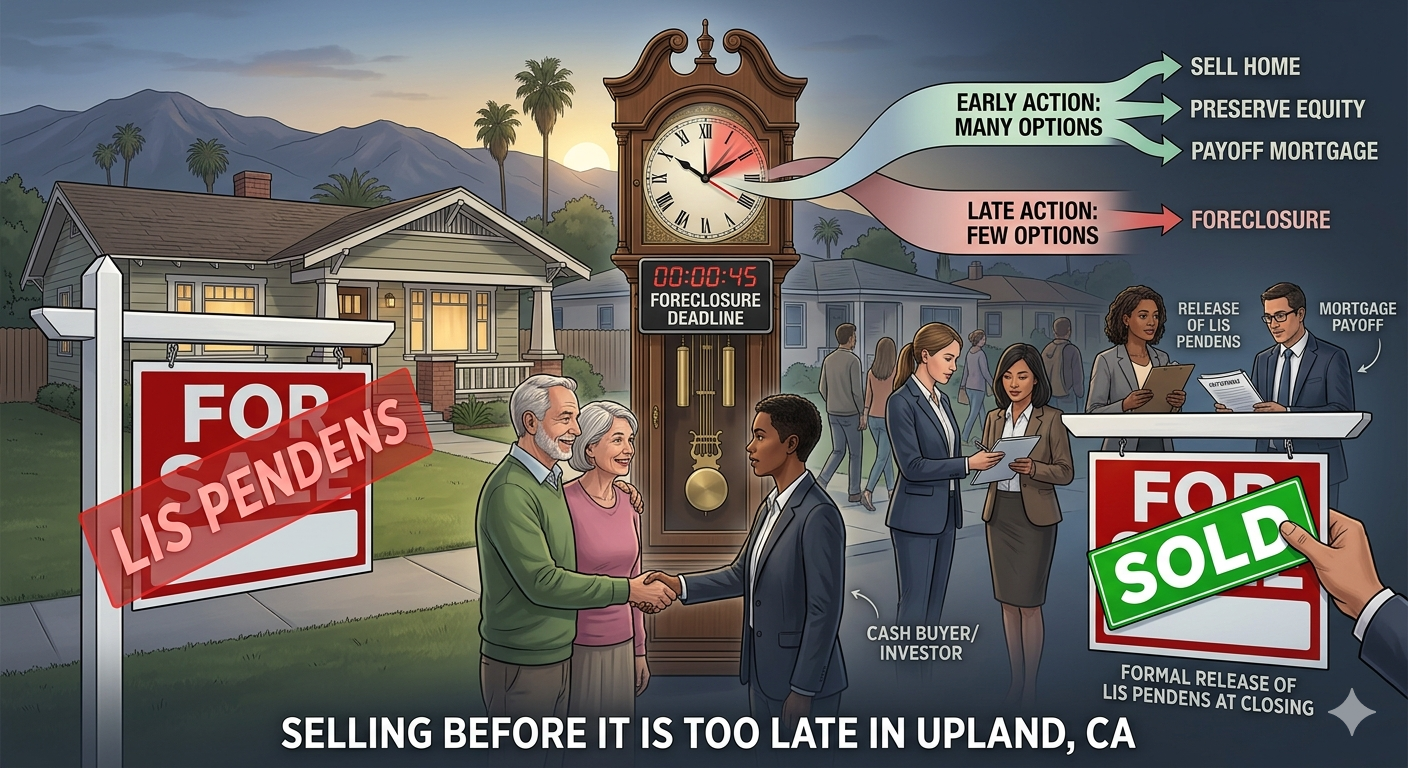
For many Upland homeowners facing a lis pendens, selling the property before the foreclosure process concludes is the most practical way to protect their financial position. A sale can pay off the outstanding mortgage, satisfy the lender, and result in a formal release of the lis pendens at closing. If the home has equity above what is owed, the seller walks away with those proceeds. If it does not, a short sale negotiated with lender approval may still be available.
The complication that most homeowners worry about is whether a buyer can be found for a home with a lis pendens on title. The answer is yes, but the buyer pool is narrower. Most traditional buyers using conventional financing will not purchase a home with an unresolved lis pendens because their lender will not approve the loan. Cash buyers and investors familiar with distressed properties are the more realistic target market in this situation. An experienced agent who works in the Upland distressed property space knows how to reach those buyers and how to structure the transaction to make the title issue manageable.
Pricing matters enormously in this context. A home in a distressed situation that is priced realistically based on its current condition and the complexity of the title issue will move. One that is priced based on what the seller needs to net, without accounting for the discount that buyers require for taking on title risk, will not. Getting the pricing right from the start is how a distressed sale closes before the window closes entirely.
The sellers who come out of a lis pendens situation in the strongest position are almost always the ones who called an agent before they called it hopeless. There are more options in the early and middle stages of this process than most homeowners realize, and significantly fewer options in the final weeks.
Working with a real estate attorney alongside a knowledgeable agent is the combination that tends to produce the best outcomes. The attorney handles the legal dimension of the lis pendens. The agent handles the market strategy, the buyer outreach, and the transaction structure. Together, they can often coordinate a sale that resolves the legal action, satisfies the lender, and preserves whatever equity remains, all before the foreclosure process reaches a point where those outcomes are no longer possible.
Frequently asked questions about lis pendens in Upland
What is a lis pendens on a property in Upland, California?
A lis pendens is a legal notice recorded with the San Bernardino County Recorder's Office indicating that a lawsuit is pending that could affect ownership of your property. It most commonly appears during foreclosure proceedings but can also arise from divorce disputes, contractor litigation, or inheritance conflicts. It does not transfer ownership. It marks the property title and initiates a legal timeline.
How long does a homeowner have after a lis pendens is filed in California?
The timeline depends on the type of legal action. In a judicial foreclosure, the homeowner typically has a set number of days to respond to the lawsuit after being served. California's non-judicial foreclosure process provides a 90-day period from the Notice of Default before a sale date can be set. Acting within the first 30 to 60 days of a lis pendens gives homeowners the widest range of options.
Can I sell my home in Upland if there is a lis pendens on it?
Yes. A lis pendens does not prevent a sale. It does require that any buyer be informed of the encumbrance and that the underlying legal matter either be resolved at or before closing, or that the buyer accept the title with the lis pendens attached. Cash buyers and experienced investors are often the most viable buyers in this situation. An agent familiar with distressed property sales in Upland can help structure a transaction that works.
What is the difference between a lis pendens and a Notice of Default?
A Notice of Default is the formal first step in California's non-judicial foreclosure process, recorded by a lender when a borrower is significantly behind on payments. A lis pendens is tied to court-based litigation and signals an active lawsuit affecting property ownership. Both can appear on a property simultaneously, but they follow different legal procedures and timelines.
Does a lis pendens go away if I sell my home?
If the underlying legal action is resolved as part of the sale, the lis pendens is formally released or expunged and the title transfers clean to the buyer. If the litigation is still pending at closing, the buyer takes the property subject to that risk. Most standard transactions are structured to resolve the lis pendens before the deed changes hands, which requires coordination between the agent, the attorney, and the lender.
Explore your options before timelines tighten

Paul Vyhnalek works with Upland homeowners navigating lis pendens situations, pre-foreclosure timelines, and distressed property sales. Every situation is different. The conversation is free and the information is specific to your property.
📱 Call or text: 909-319-8338
🌐 Website:https://soldbypaulvyhnalek.com
📅 Schedule a call:https://soldbypaulvyhnalek.com/schedule-call
✉️ Email:[email protected]


